The 10 Best AI Detectors in 2026
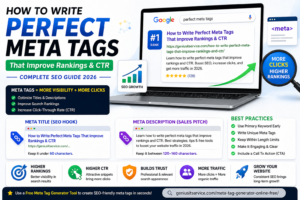
How to Write Perfect Meta Tags That Improve Rankings and CTR
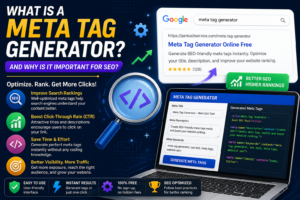
What Is a Meta Tag Generator and Why Is It Important for SEO?
Meta Tag Generator Online Free – Complete Guide to Create SEO-Friendly Titles & Descriptions
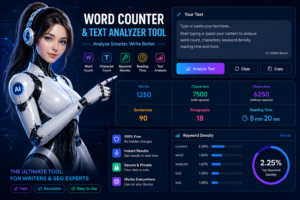
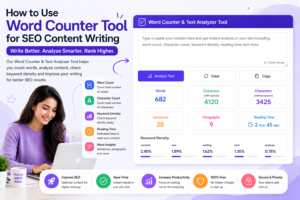
Master Your Writing Speed and Accuracy Using a Word Counter Tool Online Free
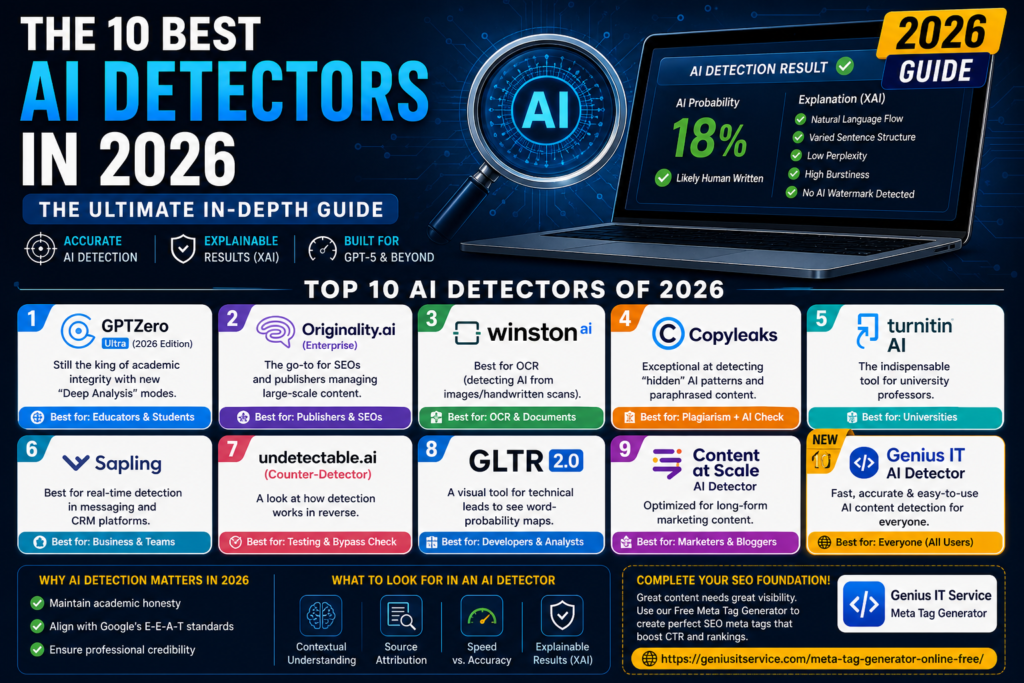
The 10 Best AI Detectors in 2026: The Ultimate In-Depth Guide
The State of AI Content in 2026
The New Reality: With the mainstream adoption of GPT-5 and other advanced LLMs, the line between human and machine writing has blurred.
The Stakes: Why detection matters for academic honesty, Google’s E-E-A-T standards, and professional credibility.
The 2026 Guide Mission: Moving beyond simple “Percentage Scores” to Explainable AI (XAI)—tools that tell you why they think a text is AI-generated.
Why AI Detection is Non-Negotiable in 2026
For Educators: Maintaining the value of a degree in an era of instant essay generation.
For Content Publishers: Aligning with Google’s updated E-E-A-T signals to avoid “helpful content” penalties.
For Recruitment: Ensuring technical assessments and cover letters reflect the candidate’s true voice.
The Technology Behind the Curtain: How Detectors Work Now
Burstiness and Perplexity: Still relevant, but no longer enough for GPT-5.
Watermarking vs. Semantic Analysis: How 2026 tools look for structural “fingerprints” left by the latest models.
The Rise of Explainable AI (XAI): Why the best AI detectors 2026 edition now provide heatmaps and source-tracing rather than just a “Yes/No” result.
(The 10 Best AI Detectors in 2026)
The “False Positive” Problem: A Critical Concern
The Non-Native Speaker Bias: Addressing the significant issue where academic AI detectors often flag non-native English speakers due to their use of simpler, more formal sentence structures.
The Human Cost: How a false accusation of cheating can derail a student’s or freelancer’s career.
The Solution: Why you should never use an AI detector score as the sole basis for disciplinary action.
Top 10 AI Detectors of 2026 (Ranked & Reviewed)
The 10 Best AI Detectors in 2026
Detailed reviews of the year’s top performers, including pros, cons, and specific use cases.
GPTZero Ultra (2026 Edition): Still the king of academic integrity with new “Deep Analysis” modes.
Originality.ai (Enterprise): The go-to for SEOs and publishers managing large-scale content.
Winston AI: Best for OCR (detecting AI from images/handwritten scans).
Copyleaks: Exceptional at detecting “hidden” AI patterns and paraphrased content.
Turnitin AI: The indispensable tool for university professors.
Sapling: Best for real-time detection in messaging and CRM platforms.
Undetectable.ai (The Counter-Detector): A look at how detection works in reverse.
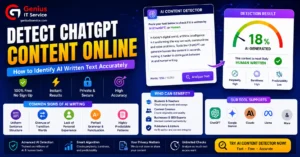
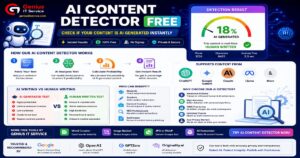
Genius AI Content Detector: A Free AI Content Detector for bloger Students and Others.
Content at Scale AI Detector: Optimized for long-form marketing content.
ZeroGPT: A lightweight, free option for quick daily checks.
Can These Tools Detect GPT-5 and Beyond?
The GPT-5 Challenge: Can current tools keep up with the increased nuance and “personality” of the latest LLMs?
The Cat-and-Mouse Game: A look at why no tool is 100% accurate and the importance of human-in-the-loop verification.
SEO Strategy: AI Content and Google’s E-E-A-T
Is AI Content Banned? Clarifying that Google rewards high-quality content, regardless of its source, but penalizes low-value automation.
The Utility of Metadata: While scanning for AI is important, having the right technical foundation is equally vital for SEO.
The Expert Link: To ensure your high-quality content (whether human or AI-assisted) is indexed properly, you need clean technical SEO. Use the Genius IT Meta Tag Generator to create professional, search-ready snippets that help your content stand out.
Best AI Detector for GPT-5 Content: What to Look For
Contextual Understanding: Does the tool understand the intent of the writing?
Source Attribution: Can it point to specific data sources the AI might have hallucinated?
Speed vs. Accuracy: Balancing the need for quick scans with the necessity of deep analysis.
As we navigate the complexities of digital publishing in 2026, the rise of advanced LLMs like GPT-5 has made AI Content Detection an essential pillar of editorial integrity. Adhering to Google’s Search Quality Guidelines, creators must ensure that their work maintains high E-E-A-T signals, prioritizing human-centric value over low-effort automation. While detection tools provide critical oversight, technical excellence remains equally vital; utilizing a professional Meta Tag Generator ensures that even AI-assisted content is wrapped in accurate, high-performance metadata. This holistic approach—combining rigorous content verification with precise technical SEO—is the only way to sustain long-term rankings and build genuine trust with a modern audience.
Common Beginner Mistakes in AI Detection
Over-reliance on Percentages: Thinking an 80% score means 80% of the text is AI.
Ignoring the Editing Process: Flagging human writers who use Grammarly or other AI editing tools.
Failure to Update Tags: Creating great content but forgetting the metadata. Again, tools like the Meta Tag Generator Online Free are essential to finish the job correctly.
Conclusion: The Future of Authorship
A Collaborative Future: Why 2026 is the year of “Cyborg Writing”—humans and AI working together.
The Final Word: Use detectors as a guide, not a judge. Focus on transparency, quality, and technical excellence.
If you are working with content, these tools can further improve your productivity:
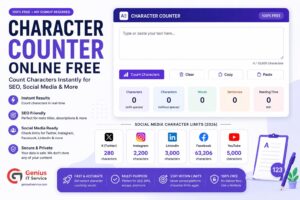
📊 Improve your writing accuracy with our Word Counter Tool Online Free
🔤 Instantly format your text using our Text Case Converter Tool
🤖 Detect AI-written content easily with our AI Content Detector Tool
Posts Grid
Author Profile
Genius IT Services
Posts Lists
- Keyword Stuffing: Why writing “Cheap Shoes, Buy Shoes, Best Shoes” is a recipe for a Google penalty.
- Duplicate Tags: The danger of using the same title and description for every page on your site.
- Ignoring the Mobile View: How long descriptions get chopped even shorter on smartphones.